
Norfolk Carrstone
The local construction alternative to that fancy Caen limestone.

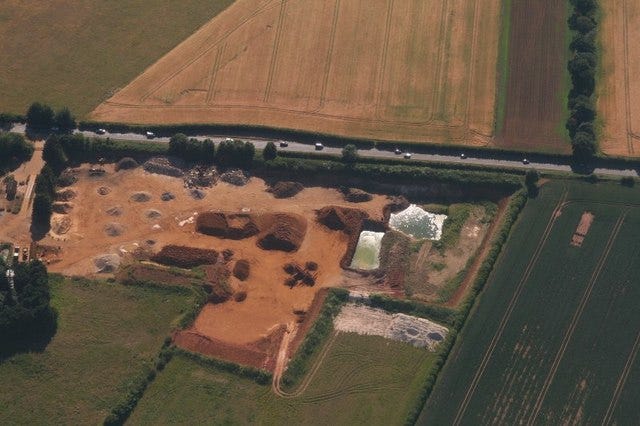
The Carrstone quarry on the outskirts of Snettisham (Chris/geograph)
Regular readers of this blog (and I love you all dearly) will know that, on the quiet, I am a bit of a Geologist who ranks a trip to Mount Etna, preferably when it is in one of its more lively moods, as one of my most heartfelt desires in life.
Scuttling up the side of a permanently disgruntled volcano is, perhaps, one of the more glamorous aspect of geology, but that doesn’t mean that there aren’t plenty of features in and around Norfolk to get excited about.
One such site is the Snettisham Carrstone quarry on the edge of the village that shares its name.
I’d often wanted to wander beyond the stern iron gates that separated its wonders from the wider world but was never able to so until, under the auspices of the very wonderful Mr and Mrs Taylor, the Geology lecturers at NORCAT in King’s Lynn at the time, my ‘O’ level group paid the quarry a visit one brisk Norfolk winter morning.
The whole site occupies around 27 acres of what might otherwise be regarded as prime North Norfolk real estate but, fortunately, will probably avoid any and all residential despoilment for at least the foreseeable future, thanks to the presence of a type of moth, Nothris verbascella for those of you who want to look it up, that thrives on the site, its only known location in the entire country whose host plant, the wonderfully named Hoary Mullein, is abundant in the parts of the quarry that are not worked.
Carrstone, which is also, due to its very distinctive colour and appearance, also referred to as Gingerbread Stone, is a sedimentary rock that is made up of predominantly sandstone but with added iron oxides which contrive to give it that familiar rusty red hue that is so instantly recognisable at the base of the famous cliffs at Hunstanton where the seam can be seen rising above the existing coastline.
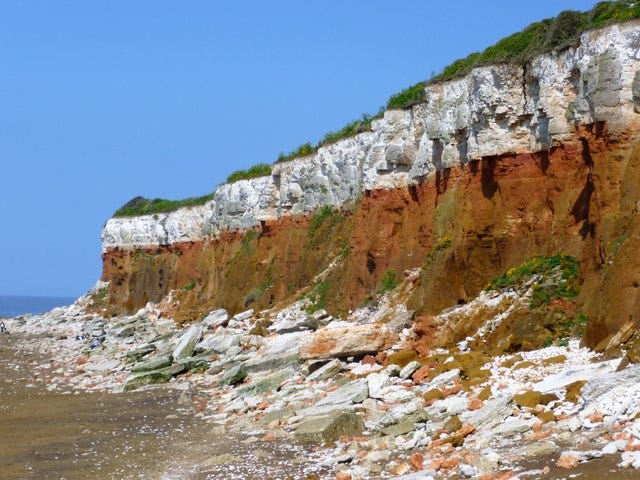
Carrstone in its most familiar guise at the base of Hunstanton cliffs (Richard Humphrey/geograph)
It’s been used as a building material for many centuries now and can be seen in many a Norfolk home or wall but, compared to other types of sandstone, it is relatively soft, which means it weathers and erodes (those two infamous terms loved by Geography teachers the world over) rather more quickly than some of the other materials that might have been used in a buildings construction-but, despite its geological fragility, Carrstone has long been a construction mainstay throughout Norfolk with many historic houses, churches and walls incorporating it within their architecture; it’s distinctive appearance making it one of the iconic sights of Norfolk's architectural landscape.
A fine example of its use can be seen throughout the village of Castle Rising, including parts of the castle itself, with its principle designer and builder, one William d'Aubigny II, a man who may have been more well acquainted with the famous Caen limestone that adorns Norwich Castle, ultimately deciding on a far cheaper and easily resourced alternative for his own dwelling.
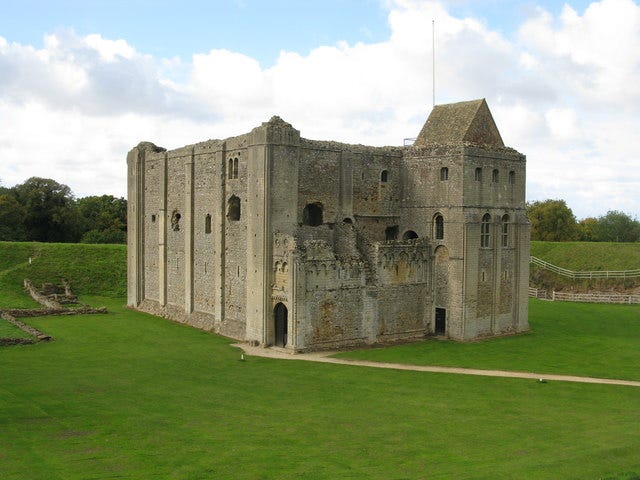
Castle Rising. Here be Carrstone. (G.Laird/geograph)
Keep an eye out for it next time you are strolling though any Norfolk village-you may end up being surprised at just how much a simple sandstone that was originally hewn from one small site has become such a prominent part of our landscape.